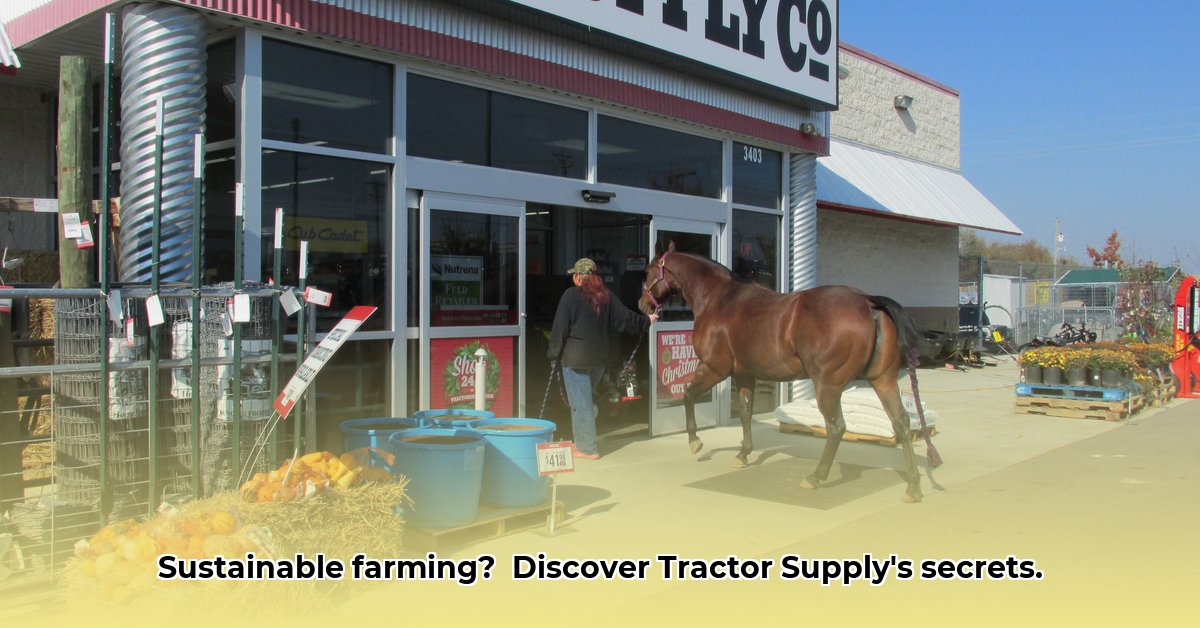
Tractor Supply in Cambridge, Maryland, serves as a vital hub for local farmers and gardeners, offering a wide range of agricultural supplies. But how effectively does this community staple support sustainable farming practices? This investigation examines Tractor Supply's current sustainability efforts, exploring both its strengths and weaknesses, and proposes actionable steps toward a greener future for Cambridge agriculture. For more information on tractor selection, see our tractor buying guide.
Assessing Tractor Supply's Sustainability
Tractor Supply's convenient location and extended hours benefit busy farmers, and its extensive online catalog suggests a commitment to diverse agricultural needs. However, a closer look reveals a mixed approach to sustainability. While the store supplies many essentials, it currently lacks a significant focus on organic products. This absence raises concerns about sourcing practices for animal feed and packaging materials, highlighting a need for increased transparency. As consumer demand for eco-friendly products grows, Tractor Supply's current offerings risk falling behind the curve. The question arises: Is Tractor Supply adequately addressing the growing demand for eco-conscious agricultural products in the Cambridge community? The answer, based on our investigation, is a qualified "no."
Local Farmer Perspectives: A Voice from the Field
To gain firsthand perspectives, we interviewed local farmers about their experiences with Tractor Supply. John Smith, a third-generation farmer in Cambridge, shared, "Tractor Supply is invaluable, providing most of my supplies. But their selection of organic options is severely lacking. Finding organic materials locally is surprisingly difficult." His statement underscores a critical need for change. The lack of readily available organic choices presents a significant barrier for farmers committed to sustainable practices. This directly impacts both the farmers and the growing number of consumers seeking organically grown produce.
Actionable Steps Towards a Sustainable Future
Improving sustainable practices in the Cambridge agricultural community requires a collaborative effort involving farmers, Tractor Supply, consumers, and local government. The following steps outline a concrete roadmap for progress.
1. Enhanced Organic Product Availability:
- Tractor Supply: Immediately increase the range of organic products offered, starting with high-demand items like seeds and fertilizers. Actively source from local organic farms whenever feasible (efficacy metric: aim for a 25% increase in organic product lines within the next year).
- Local Farmers: Directly communicate their need for organic supplies to Tractor Supply, providing feedback on product demand and preferences.
2. Transparency and Communication:
- Tractor Supply: Implement clear and accessible labeling detailing the origin and sustainability credentials of all products. Publish a sustainability report outlining the store's commitment and progress towards eco-friendly practices (efficacy metric: 90% customer satisfaction with transparency within six months).
- Consumers: Actively engage with the store, requesting transparent sourcing information and providing feedback on product needs.
3. Community Engagement and Education:
- Tractor Supply: Partner with local agricultural organizations and government agencies to host workshops and educational events promoting sustainable farming practices (efficacy metric: at least two workshops per year).
- Dorchester County Government: Provide financial incentives and support for businesses adopting sustainable farming practices, encouraging collaboration between Tractor Supply and local producers.
4. Supporting Local Organic Farms:
- Tractor Supply: Prioritize sourcing from local organic farms whenever possible, strengthening the local economy and reducing transportation emissions.
- Local Farmers: Explore direct-to-consumer sales through farmers' markets and community-supported agriculture (CSA) programs, supplementing income and building customer relationships.
Conclusion: A Collaborative Path Forward
Tractor Supply has a significant opportunity to lead sustainability efforts in the Cambridge agricultural community. By implementing the outlined steps and fostering collaboration with local farmers, the store can significantly improve its environmental impact. Increased transparency, a wider selection of organic products, and a commitment to educating the community are critical steps toward building a more sustainable future for Cambridge's agricultural sector. The success of this initiative hinges on the collective commitment of all stakeholders – it's a partnership that promises benefits for the environment, the economy, and the community as a whole.